Alarming Statistics on Medical and Obstetrical Errors

We all turn to doctors and other healthcare providers to treat injuries and illnesses; however, sometimes a doctor actually causes harm. In fact, medical errors occur far more often than most people realize. Obstetrical errors, in particular, impact a surprisingly large number of woman and newborns each year. Given the often-tragic results of obstetrical errors, it should come as no surprise that those errors ultimately account for a substantial proportion of the largest malpractice liability awards.

Consider the following facts and figures relating to obstetrical errors:

• More than 157,000 potentially avoidable injuries to mothers and newborns occurred during childbirth in just a single year, according to the federal Agency for Healthcare Research and Quality.

• Cesareans now make up almost one-third of all births, a sharp spike from two decades ago, when the rate was around 20 percent.

• A study published in Health Affairs found that rates vary dramatically among hospitals, from 7 percent to 70 percent and 2.4 percent to 36 percent among a lower-risk subgroup.

• Unexpected medical complications in deliveries were two to five times more likely in low-performing hospitals than in high-performing hospitals.

The good news is that when a focused effort is made to improve care and avoid medical errors the results can be dramatic. Consider the following examples as cited in a recent article in The Hill:

• Hospital Corporation of America reduced maternal fatalities from pulmonary embolism by 87 percent.

• New York Presbyterian Hospital registered brain injuries from oxygen deprivation to newborns at a rate 98 percent below the national average.

• Ascension Health, the nation’s largest Catholic hospital network, reduced incidence of brain trauma at four pilot sites by 85 percent.

• Premier Inc. health network reduced birth trauma among full-term newborns by 74 percent.

Efforts aimed at reducing the number of obstetrical errors are certainly commendable; however, for the victim of a medical error, a single error can be life-altering. Until medical errors are eliminated completely, victims and their families will continue to suffer physically, emotionally, and financially. Making matters worse, many states have enacted damage “caps” that limit the amount of compensation a victim can be awarded in a medical malpractice lawsuit, regardless of the extent of the harm suffered.

As any victim will tell you, more effort should be spent on preventing medical errors and improving patient care and less effort wasted on stripping victims of their rights.

Could a Baby’s Name Influence the Likelihood of Scary Hospital Errors?

A new study published in early July in the journal Pediatrics has many obstetricians and hospital safety officials talking.

Per the research, approximately 11 percent of medical errors affecting newborn babies stem from misidentification. Many hospitals use a relatively generic naming convention, in which newborns are named “babygirl Smith” or “babyboy Miller.” In some cases, this convention involves the mother’s name, such as “Debrasgirl Smith” or “Mindysboy Miller.”

Dr. Jason Adelman, a New York City public safety officer, reported that “many people knew that using only ‘babygirl’ or ‘babyboy’ was a problem, but they couldn’t really report it, because people don’t like to report errors… We came up with a way to track them.”

Dr. Adelman and his team examined the frequency and severity of errors in hospital orders over a two-year period at two different hospitals in New York. Fortunately, these errors are often caught and fixed before problems can develop, such as:

  • One baby getting milk from the wrong mother and having an allergic reaction or some other problem as a result of drinking non-maternal milk;
  • A patient getting the wrong imaging test or lab results;
  • A patient being misdiagnosed or under diagnosed for a potentially dangerous condition.

Adelman et al found that, when hospitals use the more specific and concrete naming convention involving the mother, errors drop by a substantial 36 percent margin. Interviewed for the Milbank Quarterly about the study, a pediatrician at Newton Wellesley Hospital in Massachusetts named Dr. Clay Jones said “medical errors that can occur when physicians or other healthcare professionals confuse one patient for another can be quite serious, even deadly.”

However, he offered the caveat that “the results of the study are impressive, simply looking at the percent decrease in retract and reorder errors… but we can’t draw any firm conclusions.” Perhaps, the decrease in errors stemmed from the fact that researchers observed the hospital staff, for instance, making them more conscious of their behavior.

While more research is needed, the investigation suggests that very subtle factors can contribute to hospital errors, which lead to thousands of deaths and untold agony for American patients every year.

What Every Patient Should Know About “Number Needed to Treat”

Most drug advertisements today include a lot of superficial information touting the benefits of medications, including statistics that can make treatments look fantastic and benign. While the statistics these drug makers cite may be accurate, they’re almost always only telling part of the story.

One of the numbers used in assessing the effectiveness of a drug is the “number needed to treat,” or NNT. As a consumer, knowing the NNT can help you make important decisions about whether or not to take a medication. Yet rarely – if ever – is the NNT included in drug ads.

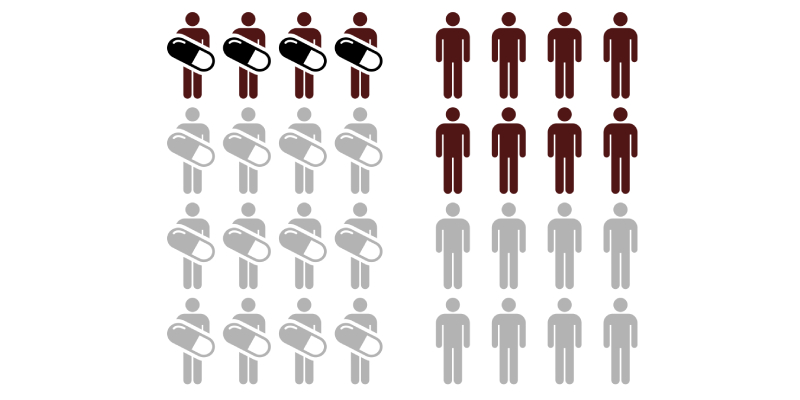
So what is the number needed to treat? It’s the number of patients that would need to be treated in order to achieve the desirable effect or outcome in one patient. For instance, suppose you have a drug that’s intended to prevent stroke. You conduct studies and determine the number needed to treat is 10. What does that mean? It means you would have to treat 10 people with that drug in order to prevent a stroke in one person.

The number needed to treat is a simple way to estimate the potential benefit to be expected from a drug or course of treatment, and it can be an especially helpful marker with respect to comparing one treatment or drug to another.

As noted, the number needed to treat is very rarely included in drug advertising, especially if that number. After all, if the NNT for a new cholesterol drug is 80, that means essentially you’d have a one in 80 chance of having a successful outcome as a result of the medication. Depending on the potential side effects caused by the drug and other factors, you may decide that the benefits and risks just don’t add up.

The NNT can also play an important role in determining negligence of a drug manufacturer whose drug caused significant injury or death.

Understanding the Difference Between Absolute Risk and Relative Risk

Turn on the television at just about any time of the day or night, and chances are pretty good that within the first 30 minutes, you will see a commercial promoting a drug. That’s because pharmaceuticals are big business, and the pharmaceutical companies know the best way to make money is to make sure consumers know what their drugs can do.

There’s nothing wrong with advertising in general; but problems can arise when the claims a company makes distort the truth without actually being out-and-out lies. Statistics are often used to skew messages in advertising and elsewhere. And while that practice can be misleading, when it comes to claims regarding medications, this practice can be downright dangerous.

Most drug commercials talk about risk in terms of how well their medications work to prevent whatever ailments they’re intended to treat. But drug makers usually talk about relative risks, often completely leaving out the absolute risks determined by clinical studies.

Absolute risk is your overall risk of developing a disease or condition over time as compared to everyone else. We all have absolute risks when it comes to developing common diseases like heart disease. We can say one out of 10 people will develop X disease in his or her lifetime, which is meaningful when it comes time to determine whether we want to have treatment or not.

Relative risk, on the other hand, compares the risks between two specific groups, often producing results and percentages that are skewed. That makes it difficult to make educated decisions about whether or not to take a medication, for instance, and it can also misstate the actual – or absolute – risks associated with taking a drug.

Understanding absolute and relative risks is also vitally important in legal cases determining negligence of drug manufacturers, and it’s one of the primary reasons why having a skilled attorney is critical in any negligence or medical malpractice case.

Copyright 2026 Lawyers Blog | All Rights Reserved.