Four Medical Problems That Are More Common in Summer

Summers are filled with picnics, barbecues, beach trips and other fun activities, but they can also be a time of increased risks for specific types of disease. While it may seem like most illnesses occur during the cold months of winter, summer brings its own health issues, including these four common problems:

  • Asthma
    Summer staples like campfires and smoke from barbecue grills, significant changes in the weather including increases in humidity – even chlorine – can all increase the risk of asthma problems and allergic reactions, according to the American College of Allergy, Asthma and Immunology.
  • Swimmer’s ear
    Whether you swim in a pool, the ocean or a lake, the ear can trap water, and that can lead to infections. Swimmer’s ear is responsible for about 2.4 million trips to the doctor each year. Drying your ears thoroughly is the best way to prevent swimmer’s ear from occurring.
  • Food poisoning
    The warm summer weather provides ideal conditions for bacterial growth, and that means the risk for food poisoning increases dramatically. If you’re planning a barbecue or picnic, use these tips from the USDA to avoid food-borne illnesses.
  • Lyme disease
    Carried by tiny deer ticks hardly larger than the head of a pin, the CDC says Lyme disease affects tens of thousands of people each year. The agency provides tips on how to prevent tick bites and how to remove ticks once they’ve latched on.

Enjoying lazy summer days doesn’t mean being trapped indoors. Being aware of the risks of illness and disease that are most likely to occur in the summer is the best way to stay healthy and enjoy fun in the sun.

Six Surprising Facts about Heat Stroke

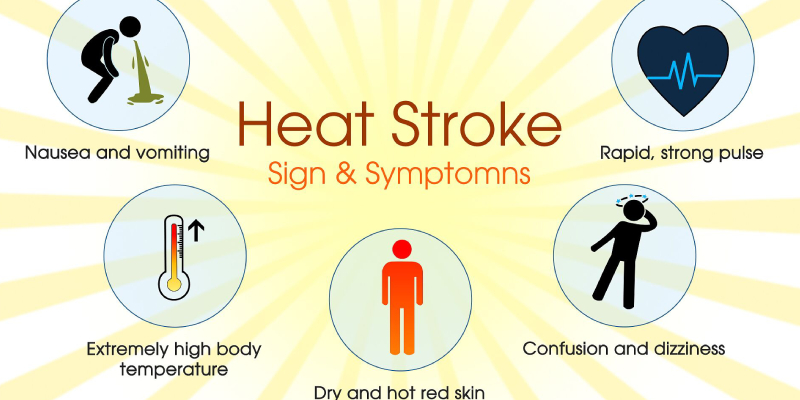
Heat stroke can be a serious danger during the summer months. Understanding what puts you at risk for heat stroke and what symptoms it causes are essential for your health and safety. Here’s what you need to know to stay safe:

  • Heat kills an average of 658 people every year in the U.S., according to a study from the Centers for Disease Control and Prevention (CDC) that tracked heat-related deaths from 1999 to 2009.
  • The weather doesn’t have to be super-hot to create the conditions for heat stroke. People who play or work in direct sunlight as well as those who engage in physical activity outdoors can begin to experience symptoms of heat stroke while temperatures are in the 80s and humidity is 80 percent or more, according to the Cleveland Clinic.
  • Even if you’re physically active, you can still be at an increased risk for heat stroke. People who are elderly or very young aren’t able to regulate temperatures as well as others, making them more susceptible to heat stroke. Those who are overweight or obese as well as those who have chronic diseases also stand at elevated risk, as do those who aren’t used to high temperatures.
  • Some medications can increase your risk for heat stroke, including blood pressure medications, antidepressants and ADHD medications.
  • Feeling hot isn’t always the primary symptom of heat stroke. In fact, some people first develop headache or light-headedness as the key symptoms. As heat stroke progresses, it can cause nausea and muscle cramps.
  • While it may seem logical to sweat more when you’re hot, in heat stroke, you actually stop sweating as your body’s temperature regulation controls shut down.

Five Scary Things You Didn’t Know about Hospital Errors

Doctors and other medical personnel are in unique positions of trust; when we’re ill or injured, we trust these men and women with our very lives. But in recent years, several studies have revealed an alarmingly high number of medical errors, many of which lead to life-threatening complications. Consider these eye-opening statistics:

• More than 400,000 people die each year as a result of medical errors, according to a study published in the Journal of Patient Safety. That alarmingly high figure places preventable medical errors as the third leading cause of death in the U.S. Heart disease and cancer are the top two causes.

• Each year, more than 700,000 patients acquire an infection while hospitalized, and about 75,000 of those patients die, according to data from the Centers for Disease Control and Prevention (CDC).

• Hospital errors occur more frequently in critical care units, according to a study by Harvard University Medical School, which found preventable errors occurred in nearly half of all ICU patients. Most errors were due to simple “slips and lapses” and not due to lack of knowledge.

• The Institute of Medicine says about $400 billion is wasted each year in medical costs in the U.S. due to unnecessary services, inefficient delivery of services and missed prevention opportunities, all of which can be related to medical errors.

• Jackson Healthcare Survey found 92 percent of doctors reported they made medical decisions based on fear of being sued rather than care based on their patients’ best interests – a disturbing trend called “defensive medicine.”

Some experts hope the expansion of electronics in the healthcare industry may help reduce medical errors, but only time will tell if electronic devices provide a benefit to patients or become just another source of potential errors.

Exploring the Impact of New Regulations: Where Are We Now Regarding Compounding Pharmacies?

As we have blogged for the past several years, the emergence of compounding pharmacies created an unexpected danger for consumers because there were practically no controls or standards governing the manufacturing of these medications. Compounding pharmacies came into existence to create personalized medication for patients.

The dangers of compounding pharmacies first became evident in 2012, when a large outbreak of fungal meningitis was discovered in the United States. The source was traced back to contaminated medications packaged by the New England Compounding Center, a large compounding pharmacy based in Massachusetts. The medications in question, methylprednisolone used in injections, eventually led to 64 confirmed deaths, over 700 injuries, and more than 400 lawsuits filed against the New England Compounding Center, resulting in over $100 million dollars in settlements.

Of greater importance for consumers, the outbreak prompted congressional leaders and federal health officials to review the regulations that govern compounding pharmacies. This review led to the passage of the Drug Quality and Security Act, designed to amend the Federal Food, Drug, and Cosmetic Act to provide new levels of FDA oversight regarding the operation of compounding pharmacies.

As explained by the FDA, “compounding is a practice in which a licensed pharmacist, a licensed physician, or, in the case of an outsourcing facility, a person under the supervision of a licensed pharmacist, combines, mixes, or alters ingredients of a drug to create a medication tailored to the needs of an individual patient.” Due to the rising cost of many injectable drugs such as methylprednisolone, many health providers are turning to non-traditional, large scale compounding pharmacies, which many argue transforms the process into large-batch manufacturing as opposed to individualized chemistry.

Although FDCA changes are intended to make medicine safer, most compounding pharmacies do not fall under the regulatory umbrella of the FDA, and rely on state-run boards for oversight. However, “Firms that register with FDA as “outsourcing facilities” under section 503B will be regulated by FDA and inspected by FDA according to a risk-based schedule.” This change was designed to prevent large non-traditional pharmacies from committing errors similar to those in 2012. Traditional compounding pharmacies continue to operate much as they had before 2012.

In addition, the Drug Quality and Security Act created a Pharmacy Compounding Advisory Committee, which “provides advice on scientific, technical, and medical issues concerning drug compounding under sections 503A and 503B. The committee advises, as required, on any other product for which the FDA has regulatory responsibility, and makes appropriate recommendations to the Commissioner of Food and Drugs.”

Congress has worked to help prevent tragedies arising from non-traditional compounding pharmacies, but consumers must still be aware of the risks of compounded drugs. Traditional compounding pharmacies often have no FDA oversight, and as the FDA cautions, “There can be health risks associated with compounded drugs that do not meet federal quality standards. Compounded drugs made using poor quality practices may be sub- or super‑potent, contaminated, or otherwise adulterated. Additional health risks include the possibility that patients will use ineffective compounded drugs instead of FDA-approved drugs that have been shown to be safe and effective.”

As consumers of any medication, we should make certain that we know all the details of any medication before beginning use, including having knowledge of the pharmacy which compounded the product, the expected side effects, and all of the ingredients and drugs contained.

Copyright 2026 Lawyers Blog | All Rights Reserved.